
How to Choose a Nursing Home in New Jersey: The Questions Every Family Must Ask Before Signing
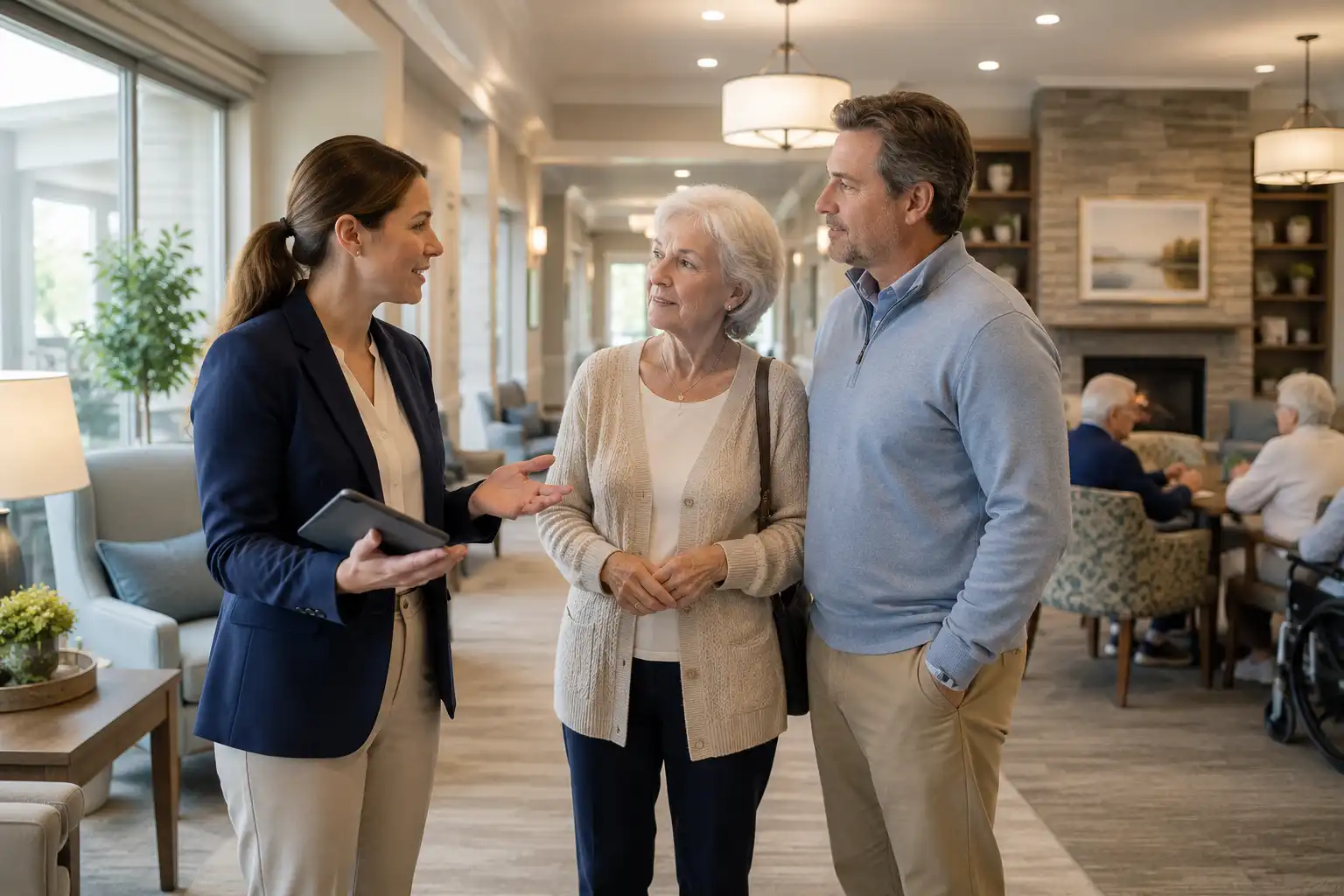
From Clelia:
When my family needed to find care for my Nonna, we didn't know what to look for. We visited a few places. We assessed the cleanliness, the lobby, the friendliness of the staff who greeted us at the front desk. We chose based on factors that felt relevant at the time, proximity, availability, a vague sense of warmth, and discovered later that we hadn't asked the questions that actually predicted the quality of care she would receive.
I became a Certified Dementia Practitioner in part because of that experience. Because I needed to understand what we hadn't known to look for. Because I wanted to be able to give families the guide I wished we had had.
This is that guide.
From Eric:
Choosing a nursing home is one of the most consequential decisions a family makes for an aging parent or spouse: and it is almost always made under enormous time pressure, with insufficient information, at a moment of acute crisis. Most families receive a discharge date from the hospital and a list of facilities with open beds. They have days, not weeks, to make a decision that will profoundly affect the quality of their loved one's remaining years.
The financial piece, Medicaid planning, what happens to the assets, must happen simultaneously with the facility selection. Waiting to address the legal and financial questions until after the facility is chosen means crucial planning time is lost.
The direct answer: Choosing a nursing home in New Jersey requires evaluating staffing levels (particularly registered nurse hours per resident per day), CMS star ratings from the Medicare Care Compare tool, state inspection records, infection control history, dementia care quality for memory care units, and the admission agreement's financial terms. Quality of care varies significantly among NJ facilities, and the most important indicators, staffing levels, inspection history, ownership structure, are available publicly and should be reviewed before any visit.
Start With CMS Care Compare: Before You Visit Anything
Before you visit a single facility, visit Medicare.gov's Care Compare tool (medicare.gov/care-compare). This free resource provides publicly available, government-verified information about every Medicare- and Medicaid-certified nursing home in New Jersey.
The 5-star overall rating is composed of three equally weighted components:
- Health inspections: based on the results of annual state inspections and complaint investigations
- Staffing: based on reported registered nurse (RN) and certified nursing assistant (CNA) hours per resident per day
- Quality measures: based on clinical outcomes data
Each component receives its own rating, and the overall rating reflects the combination. A facility can receive a high staffing rating and a low inspection rating, which tells you something very specific about where it excels and where it falls short.
The inspection report is the most detailed and informative part of the Care Compare data. It lists every deficiency cited during the most recent state inspection, along with the deficiency's scope (isolated, pattern, widespread) and severity (no harm, potential for harm, actual harm, immediate jeopardy). Reading the inspection report, not just the summary star rating, reveals the specific problems that state surveyors found.
Patterns matter more than single incidents. A facility with one deficiency in one inspection may have simply had a bad day; a facility with the same deficiency category cited in three consecutive inspections has a systemic problem.
Staffing, The Single Most Important Quality Indicator
Among all the publicly available quality indicators for nursing homes, the research evidence consistently points to one as the strongest predictor of outcomes: registered nurse (RN) hours per resident per day.
Facilities with higher RN staffing have lower rates of pressure ulcers, hospitalizations, infection, falls, and weight loss. They have better pain management outcomes. Their residents are more likely to be out of bed, engaged in activities, and interacting with staff.
CMS requires nursing homes to report staffing data, and this data appears on Care Compare. But the reported figure reflects an average. it includes periods of high and low staffing. What the average doesn't show is weekend and evening staffing, which is typically significantly lower than weekday daytime staffing.
When you visit, ask specifically: What is the RN-to-resident ratio on weekends? What is the aide-to-resident ratio on nights and weekends? How is the facility's turnover among CNAs, and what does the facility do to retain staff?
High CNA turnover is a strong signal of a management or culture problem. Aides who leave frequently cannot develop the relationships with residents that make care genuinely person-centered. Consistent, stable staffing is as important as adequate numbers.
Visiting the Facility, What to Look For Beyond the Lobby
The lobby, the reception area, and the administrator's office are not where the quality of a nursing home reveals itself. Visit the facility at a time other than the scheduled tour, on a weekend morning, or around mealtime, and pay attention to what is happening in the resident areas.
What you're looking for:
Resident engagement. Are residents out of their rooms? Are they in activities, at meals, in common areas? Or are they sitting in hallways in wheelchairs, faces turned toward walls, with no one engaging them?
Staff interaction. Do staff members know residents by name? Do they speak to residents in respectful, adult tones, not the infantilizing "sweetie" or "honey" tone that signals a culture of condescension rather than dignity? Do they respond promptly to call lights?
The smell. A well-managed nursing home should not smell of urine. Odor is one of the most reliable quick indicators of a facility's housekeeping and continence management practices.
The activity calendar. Is there a real, varied, implemented activity program, or is "activities" a TV in a common room? Are activities offered in the evenings and on weekends, or only during Monday-Friday daytime hours?
The food. If possible, observe a meal, Is food presented attractively? Are residents offered choice? Are staff present to assist residents who need help eating?
Special Considerations for Dementia and Memory Care Units
From Clelia, CDP perspective:
If you are selecting a facility for a family member with Alzheimer's disease or another form of dementia, the general quality indicators matter, and the dementia-specific features matter equally.
The physical environment. A well-designed memory care unit uses environmental features to support orientation and reduce agitation: clear wayfinding cues, familiar objects, appropriate lighting, access to secure outdoor space, minimal noise and visual clutter, and a layout that allows safe wandering without exposure to exit points.
Dementia-specific programming. Activity programming for residents with dementia should be different from general activity programming. It should be calibrated to the disease stage, use sensory engagement, emphasize familiar activities and music from the resident's era, and create structured but flexible opportunities for meaningful engagement throughout the day. Ask specifically: who designs the memory care programming and what is their training?
Staff dementia training. Ask how staff in the memory care unit are trained in dementia communication and behavior management. How many hours of dementia-specific training does a new CNA receive before working on the unit? What training do nursing staff receive? Does the facility have any CDPs on staff?
The dementia care philosophy. Listen carefully to how staff and administrators talk about residents with dementia, Do they speak in person-centered language, talking about who the resident is as a person, what matters to them, what makes them comfortable? Or do they speak primarily in clinical and behavioral terms, managing behaviors, addressing agitation? The philosophy shapes the culture, and the culture shapes the experience.
The Financial Questions You Must Ask Before Signing
The admission agreement for a nursing home is a complex legal document, Do not sign it on the day of admission under time pressure without reviewing its financial terms.
Key questions:
Does this facility accept Medicaid? Not all NJ nursing homes accept Medicaid-funded residents. If Medicaid is your expected eventual payer. which it is for most families, confirm that the facility is Medicaid-certified and accepts Medicaid residents.
What is the private-pay rate? If you will be paying privately before Medicaid eligibility is established, what is the daily rate?
What happens when the money runs out? Will the facility continue to accept the resident once they convert to Medicaid? Some facilities require a minimum private-pay period before accepting Medicaid. Understanding this in advance prevents a devastating forced transfer at the moment when it is hardest.
Personal guarantee. New Jersey law prohibits nursing homes from requiring a family member to personally guarantee payment as a condition of admission. If the admission agreement includes such a provision, it is unenforceable and should be removed. This is one of the most important things to review before signing.
Bed-hold policy. If your family member is hospitalized, how long will the facility hold the bed? What is the cost during the bed-hold period? NJ Medicaid has specific bed-hold rules; the facility's policy should be understood in advance.
The Medicaid Planning Piece, Which Must Happen Simultaneously
Every family selecting a nursing home should simultaneously be having a Medicaid planning conversation with an elder law attorney. These two decisions, where your family member will live and how you will pay for it, cannot be made sequentially. They must be made together.
The timeline of a Medicaid application, the look-back review, the asset documentation required, and the planning strategies available all depend on exactly when the nursing home admission occurs and what assets are in play. Every day without a Medicaid planning conversation is a day of planning time that cannot be recovered.
At NJ Elder Law Center, we work with families during the facility selection process, not just the legal paperwork that follows from it. Our Client Care Coordination service helps families evaluate options, access resources, and navigate the practical dimensions of a nursing home transition alongside the legal planning.
Frequently Asked Questions
Q: How do I compare nursing homes in New Jersey? Start with Medicare's Care Compare tool at medicare.gov/care-compare, which provides ratings, inspection reports, staffing data, and quality measures for every NJ nursing home. Review the most recent inspection report in detail, not just the summary star rating. Compare staffing levels, particularly registered nurse hours per resident per day. Then visit your top candidates in person, at a time other than the scheduled tour.
Q: What is the CMS Care Compare tool? Care Compare is a free, publicly available tool at medicare.gov/care-compare that provides detailed information about every Medicare- and Medicaid-certified nursing home in the United States. Information includes 5-star ratings (broken down by health inspections, staffing, and quality measures), inspection deficiency reports, staffing data, and clinical quality measures. It is the most important starting point for any nursing home search.
Q: Can a NJ nursing home require a family member to personally guarantee payment? No. New Jersey law prohibits nursing homes from requiring a third-party guarantee of payment as a condition of admission. If an admission agreement includes a personal guarantee provision, it is unenforceable and should be crossed out or removed before signing. If a facility insists on a personal guarantee, this is both a legal violation and a red flag about the facility's practices generally.
Q: What questions should I ask when visiting a nursing home in NJ? Ask about RN staffing ratios on weekends and evenings; CNA turnover rates; how the facility handles behavioral symptoms in dementia residents; what the dementia-specific activity programming looks like; whether the facility accepts Medicaid and what their Medicaid transition policy is; and what their bed-hold policy is during hospitalizations.
Q: What is a long-term care ombudsman in New Jersey? The NJ Long-Term Care Ombudsman is a free, state-funded advocacy program for residents of nursing homes and other long-term care facilities. Ombudsmen investigate complaints, advocate for residents' rights, and help resolve problems between residents, families, and facilities. The NJ Ombudsman program can be reached through the NJ Department of the Public Advocate.
The right nursing home for your family member depends on their specific needs, and Medicaid planning must happen simultaneously with facility selection. Our team helps with both. Schedule a Consultation.
Attorney Advertising. Prior results do not guarantee a similar outcome.
Recent posts
Explore more and stay updated on important legal topics affecting you and your loved ones.
Supported Decision-Making in New Jersey: A Rights-Preserving Alternative to Guardianship
Caregiver Burnout Is Real: How to Recognize It, Name It, and Find Your Way Through It

What Happens to Your Business When You Can't Run It? Estate Planning for New Jersey Business Owners
Get the Support You Deserve
Whether you’re planning ahead or facing an urgent legal matter, our team is here to help. Schedule a consultation or contact us today to get started.
